Lucky Block KYC and Verification
 Available in US
Lucky Block can require identity verification, so it should not be treated as a “no KYC” casino. Its current official guidance lists government-issued ID such as a passport, ID card or driving licence, a selfie used with the identity document, and proof of address when required. The Help Centre accepts examples such as a recent bank statement or utility bill issued within the previous 90 days.
Verification can be connected to withdrawals and wider anti-money-laundering checks. Lucky Block does not publish a reliable universal KYC completion time, so there is no sensible fixed promise such as “verified in minutes” for every account. The practical approach is to submit clear, current documents that match your account details and allow extra time if an additional review is requested.
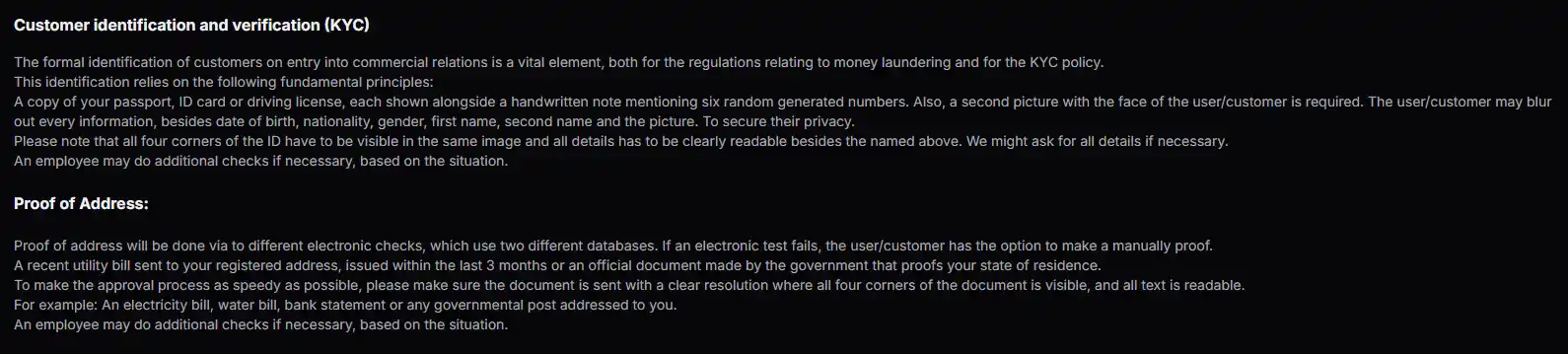
Table of Contents
- What documents can Lucky Block ask for?
- Document quality matters
- Why Lucky Block can request verification
- Withdrawals are a common point for identity checks
- Proof of address has its own rules
- Do not rely on a fixed KYC processing time
- Privacy and document handling deserve attention
- Verification and regulatory context are different questions
- How payments can trigger more questions
- What to do when verification is requested
- Prepare documents that can be checked without ambiguity
- Frequently asked questions
- Prepare for verification before it becomes urgent
What documents can Lucky Block ask for?
Lucky Block’s Help Centre currently says identity proof can include front and back images of a valid government-issued ID, driving licence or passport, together with a selfie holding the chosen document. Its AML policy also describes identity checks using a passport, ID card or driving licence.
For proof of address, the Help Centre lists a bank statement or utility bill issued within the previous 90 days, either as a PDF or as a photo of a physical copy. The AML policy additionally describes government-issued residence evidence as a possible route where electronic address checks do not succeed.
| Verification item | Current examples | Practical check before submission |
|---|---|---|
| Photo identification | Passport, government ID or driving licence | Use a valid document and make every required side visible |
| Selfie | Photo of you holding the chosen identity document | Keep your face and the document clear enough to compare |
| Proof of address | Recent bank statement or utility bill | Use a document issued within the stated 90-day window |
| Additional evidence | Further documents where extra checks are needed | Follow the request shown in your account or provided by support |
Document quality matters
The Help Centre says submitted documents should show all four corners and should not have information covered. The AML policy similarly asks for clear resolution and readable text on proof-of-address material.
That means a technically valid document can still be difficult to approve if the image is cropped, blurred, reflective or too dark. A clean submission reduces avoidable back-and-forth.
- Photograph the full document rather than only the central details.
- Use enough light to avoid shadows across names or dates.
- Check focus before uploading.
- Make sure the document is still valid where an expiry date applies.
- Use an address document from within the permitted recency window.
- Keep account details consistent with the documents you provide.
Do not send identity documents through informal channels unless Lucky Block support explicitly directs you to an approved route. Use the current verification interface or official support instructions.
Why Lucky Block can request verification
Lucky Block explains verification as part of fraud prevention, anti-money-laundering controls and checks against underage gambling. The AML policy also links identity verification to ensuring that registered details are correct and that payment methods are not being misused.
For the user, this means KYC is not only a registration formality. It can become relevant when money moves through the account, when details need to be confirmed or when a transaction receives additional review.
The main guide to Lucky Block registration explains where verification fits into the wider account journey. Registration can be quick, but it does not remove the possibility of later document requests.
Withdrawals are a common point for identity checks
Lucky Block’s current terms reserve the right to request photo identification, address confirmation or additional verification before granting withdrawals. Its AML policy also describes verification steps connected with withdrawal activity.
This is why it is risky to assume that a successful deposit guarantees an equally automatic cash-out. A withdrawal combines the payment request with account-security and compliance checks. If verification is outstanding, the payment can depend on completing those checks first.
For the payment side, see the dedicated Lucky Block withdrawals, which separates payout timing and crypto processing from the document requirements covered here.
Proof of address has its own rules
Address verification is not the same as identity verification. A passport can establish identity, but it may not prove where you currently live. Lucky Block’s Help Centre therefore lists separate address evidence, including a bank statement or utility bill issued within the past 90 days.
The AML policy says electronic checks can be used first and that manual evidence may be requested if those checks fail or are not possible. Examples include utility bills, bank statements and official government correspondence showing the residence.
Use a document that displays the same residential details associated with the account. If you have recently moved, resolve any mismatch before it becomes part of a withdrawal review.
Do not rely on a fixed KYC processing time
Lucky Block’s current public verification material explains what can be requested but does not provide a dependable universal completion time for every KYC case. A simple document review and a case requiring additional checks are not equivalent.
For that reason, avoid planning a withdrawal around an assumed same-day KYC deadline. If access to funds is time-sensitive, the better approach is to make sure your account information is accurate and your documents are available before you need them.
If a verification request appears unclear or remains unresolved, Lucky Block lists 24/7 live chat and [email protected] for support. Ask which specific item is outstanding rather than repeatedly uploading different documents without guidance.
Privacy and document handling deserve attention
KYC documents contain sensitive information. Lucky Block’s privacy policy describes identity data, photographs, contact data and financial information among the categories it can process for account creation and management.
From a user perspective, the practical rules are straightforward: submit only what the current verification request asks for, use the official account flow, and do not expose documents unnecessarily in unrelated messages or public channels. Keep copies securely if you need them for your own records.
You should also be suspicious of anyone asking for a crypto-wallet seed phrase or private key as part of KYC. Identity verification may require personal documents, but a private wallet recovery phrase is not an identity document and should remain secret.
Verification and regulatory context are different questions
Completing KYC confirms that an account has gone through an identity or compliance step; it does not answer broader questions about how the service is regulated in a particular geography. Keep the verification process and the wider regulatory context as separate checks.
This distinction helps avoid reading too much into an identity check. KYC can tell you how the operator manages account verification, while the separate Lucky Block licence and Australia rules page covers the Australia-specific regulatory context.
How payments can trigger more questions
Payment behaviour can affect the level of review because anti-money-laundering controls are designed to look at the relationship between account identity and movement of funds. A deposit method, withdrawal request or unusual transaction pattern can therefore lead to additional information being requested.
Lucky Block’s AML policy describes a staged verification framework and additional checks based on risk. Exact monetary thresholds are highly sensitive to policy changes and account circumstances, so the useful takeaway is not to memorise a number. It is to expect that higher-value or unusual activity can lead to deeper checks.
The guide to Lucky Block payments explains the cashier and crypto payment model. If a transaction is delayed, check both the payment status and any outstanding identity-verification request.
What to do when verification is requested
- Read the request carefully. Identify whether Lucky Block is asking for identity, address, selfie or another form of evidence.
- Check your account details. Names, date of birth and address should match the documents you intend to provide.
- Prepare a clear file. Use an uncropped image or accepted PDF with all required details visible.
- Use current documents. Address evidence should fall within the stated recency period.
- Submit through the official route. Avoid sending sensitive files to unverified contacts.
- Wait for a specific response. If more information is needed, provide the requested item rather than guessing.
- Escalate through official support. Use live chat or the published support email if the request is unclear.
Prepare documents that can be checked without ambiguity
The easiest way to reduce avoidable verification friction is to make each file answer one clear question. An identity document should establish who you are. A proof-of-address document should establish where you live. A selfie should allow the reviewer to compare the person with the identity document. Trying to make one incomplete image serve several purposes can create uncertainty even when the underlying information is valid.
Before uploading, compare the spelling of your name, date of birth and address with the details held on the account. Small differences can have legitimate explanations, but they are easier to resolve before a withdrawal is pending. If a bank statement uses initials, a utility account is in another household member’s name or you have recently changed address, follow the specific alternative requested by support rather than assuming any document will be accepted.
File handling also matters. Save a legible original where possible and avoid repeatedly compressing or messaging the same image between apps, which can reduce quality. For photographs, place the document on a plain surface and check glare around holograms or laminated areas. For PDFs, open the file yourself first to confirm the relevant page is present and readable. These simple checks do not guarantee approval, but they remove common reasons for a second submission.
Frequently asked questions
Does Lucky Block require KYC?
Lucky Block can require verification and its AML policy sets out identity, address and additional compliance checks. It should not be described as universally “no KYC”.
Which ID documents does Lucky Block accept?
Current official material lists a passport, government-issued ID and driving licence as examples of identity documents.
What can I use as proof of address?
The Help Centre lists a bank statement or utility bill issued within the previous 90 days. The AML policy also allows for official residence evidence in some circumstances.
How long does Lucky Block KYC take?
No reliable universal processing time is currently published for every case. Timing can depend on whether the initial documents are sufficient or an additional review is required.
Can KYC affect a withdrawal?
Yes. Lucky Block’s current terms allow identity and address checks before withdrawals are granted, so unresolved verification can affect the payout process.
Prepare for verification before it becomes urgent
Lucky Block’s KYC process is easiest to manage when the account details are accurate from the start and the documents are ready before a withdrawal becomes time-sensitive. Current official guidance gives clear examples of the identity, selfie and address evidence that may be required, but it does not support a single guaranteed completion time.
Keep the process simple: use real account details, provide clear current documents through official channels and ask support for the exact missing item if a review stalls. That preparation is more useful than relying on claims that verification can always be skipped or completed within a fixed number of minutes.
Published by the Lucky Block Casino team.